Light contact
MariCarmen uses a gentle touch and follows subtle patterns of ease and tension. The pressure is often about the weight of a nickel.
Gentle, attentive, restorative
Gentle, personalized CranioSacral Therapy with MariCarmen in downtown Flagstaff. The touch is light, the pace is unhurried, and every session responds to what your body needs that day.
Call to schedule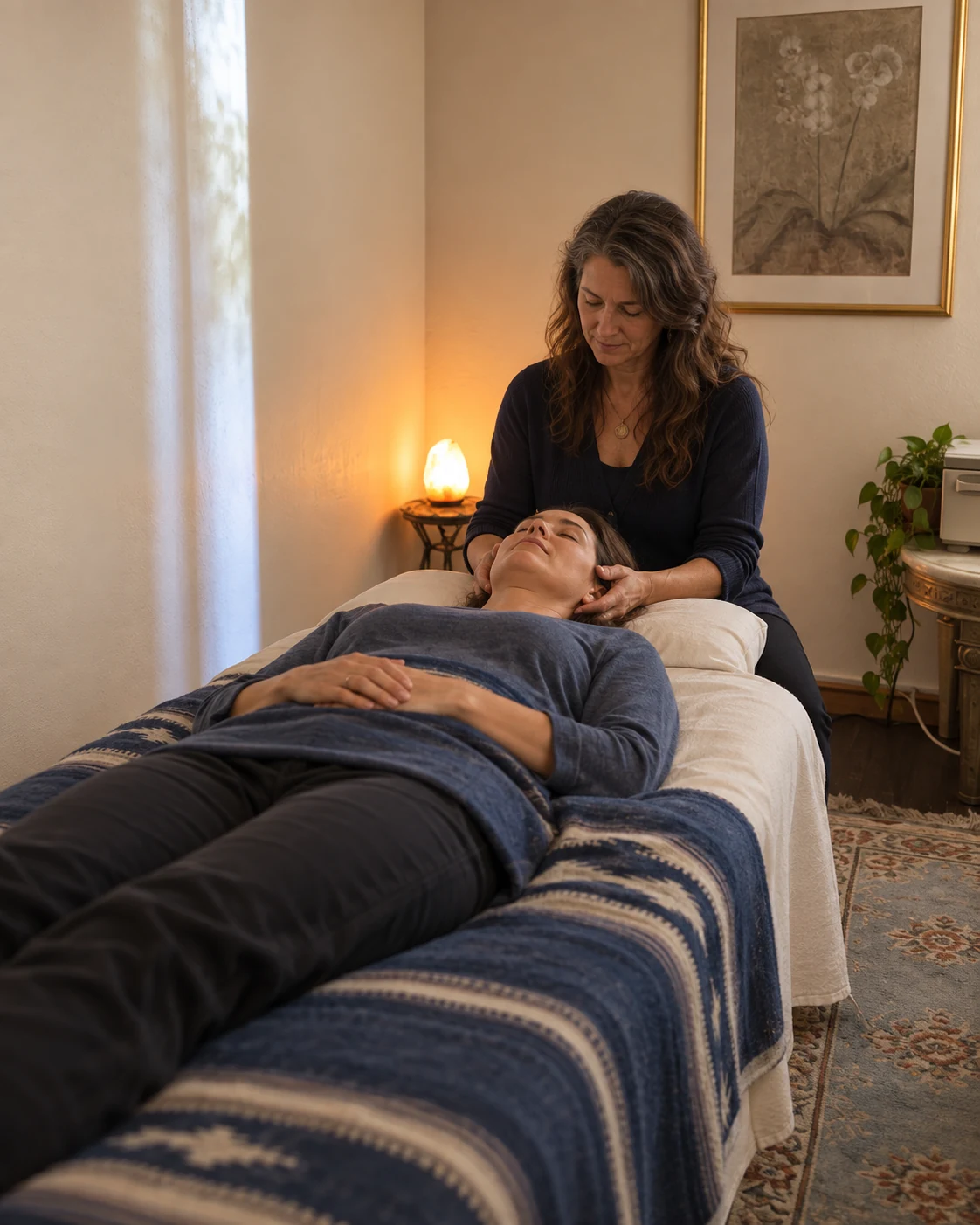
What it is
CranioSacral Therapy is a gentle, noninvasive approach that uses light touch, often around the head, spine, and sacrum. The craniosacral system includes the membranes and fluid that surround and help protect the brain and spinal cord, extending from the cranium to the sacrum at the base of the spine.
Because the brain and spinal cord are central to how the body receives and responds to information, CranioSacral training pays close attention to the tissues around this system. Everyday stress, physical strain, and protective holding patterns can all influence how comfortable and at ease a person feels in their body.
With quiet contact and careful attention, the work is intended to encourage relaxation and support the body’s natural self-regulating processes. It is not forceful manipulation. Think of it as attentive listening through the hands—creating space for the body to move from “always on” toward deeper rest.
A hallmark of the Upledger approach is pressure of about five grams—roughly the weight of a nickel. MariCarmen may place her hands beneath or around the skull, shoulders, spine, sacrum, or feet and hold a position quietly while noticing subtle changes in ease, tension, and movement.
Where the approach began
CranioSacral Therapy was developed by osteopathic physician Dr. John E. Upledger. From 1975 to 1983, while teaching biomechanics at Michigan State University, he led a multidisciplinary research team studying the craniosacral system and the clinical foundations of the approach.
Dr. Upledger’s interest began after he observed an unexplained rhythmic movement in the membranes surrounding the spinal cord while assisting with surgery in 1970. That observation led him to study earlier ideas from cranial osteopathy and pursue years of research with anatomists, physiologists, biophysicists, and bioengineers.
He founded the Upledger Institute in 1985 to teach CranioSacral Therapy more widely. That tradition of careful study, light touch, and respect for the individual continues to inform practitioners today.
Why clients come
People seek CranioSacral Therapy for many reasons—from wanting a deeply restful experience to looking for gentle, complementary support during stressful or demanding seasons. Experiences vary, and no particular outcome is guaranteed.
Potential benefits
The most immediate benefit many clients seek is a chance to settle. A quiet session may support relaxation, stress relief, body awareness, and a greater sense of ease—especially for people who find deeper pressure uncomfortable or overstimulating.
Some people also include CranioSacral Therapy in a broader wellness or healthcare plan while living with headaches, jaw tension, neck or back discomfort, chronic pain, fatigue, or the effects of physical strain. The intention is to offer complementary support, not to diagnose a condition or promise a cure.
Research into CranioSacral Therapy is ongoing, and findings about specific medical conditions remain mixed. That is why MariCarmen presents the work honestly: as gentle, individualized bodywork that may help you rest, reconnect with your body, and feel supported alongside—not instead of—appropriate medical care.
Your practitioner
MariCarmen graduated from the Upledger Institute. Her CranioSacral education complements approximately 20 years of hands-on massage and bodywork experience, bringing trained attention and an unhurried presence to every session.
How it works
MariCarmen uses a gentle touch and follows subtle patterns of ease and tension. The pressure is often about the weight of a nickel.
There is no forcing. The work unfolds slowly and responds to your comfort.
Many clients experience stillness, warmth, spaciousness, or a sense of settling.
Your first session
You’ll begin with a short conversation about what brings you in, your comfort, and what you hope to receive.
You typically remain fully clothed and rest on a comfortable table. The session is quiet, gentle, and adapted to your comfort. You are always welcome to speak, ask questions, or request an adjustment.
MariCarmen may work at the head, spine, sacrum, feet, or another area that feels relevant. Some hand positions are held for several minutes, giving you time to settle without being rushed.
Give yourself a little space before rushing back into the day. Experiences vary; you may notice relaxation, warmth, subtle movement, quiet, or simply greater awareness of your body.
Some clients feel deeply rested or even fall asleep during the session. Others notice very little in the moment. Neither response is more “correct,” and you do not need to feel a particular sensation for the session to be worthwhile.
Good to know
No. CranioSacral sessions are generally received fully clothed. Soft, comfortable clothing is a good choice.
No. This is a light-touch approach. If you want deeper muscular work, MariCarmen can help you choose another service.
Every person and session is different. Many clients describe feeling calm or rested, but no particular result is guaranteed.
No. CranioSacral Therapy is complementary bodywork and is not a substitute for diagnosis or medical care.
There is no standard number. Some people book a single restorative session, while others choose a series and adjust the timing based on their goals and how they respond.
Ask first if you have a recent concussion, blood clot, brain swelling or aneurysm, or another condition involving pressure or flow of cerebrospinal fluid. When in doubt, speak with your qualified healthcare professional before scheduling.
CranioSacral Therapy may support relaxation and general well-being, but experiences vary. Please consult a qualified healthcare professional about medical symptoms, diagnoses, or treatment decisions.
Is gentle work right for you?
Call MariCarmen with questions or to reserve a 60-minute session.
Call (928) 266-8822